Curly Hair Problems Solved: Your Top Questions Answered Simply
Frizzy hair? Uneven curls? Discover simple answers to the most common curly hair problems and learn why your hair isn’t difficult — it’s just curly.
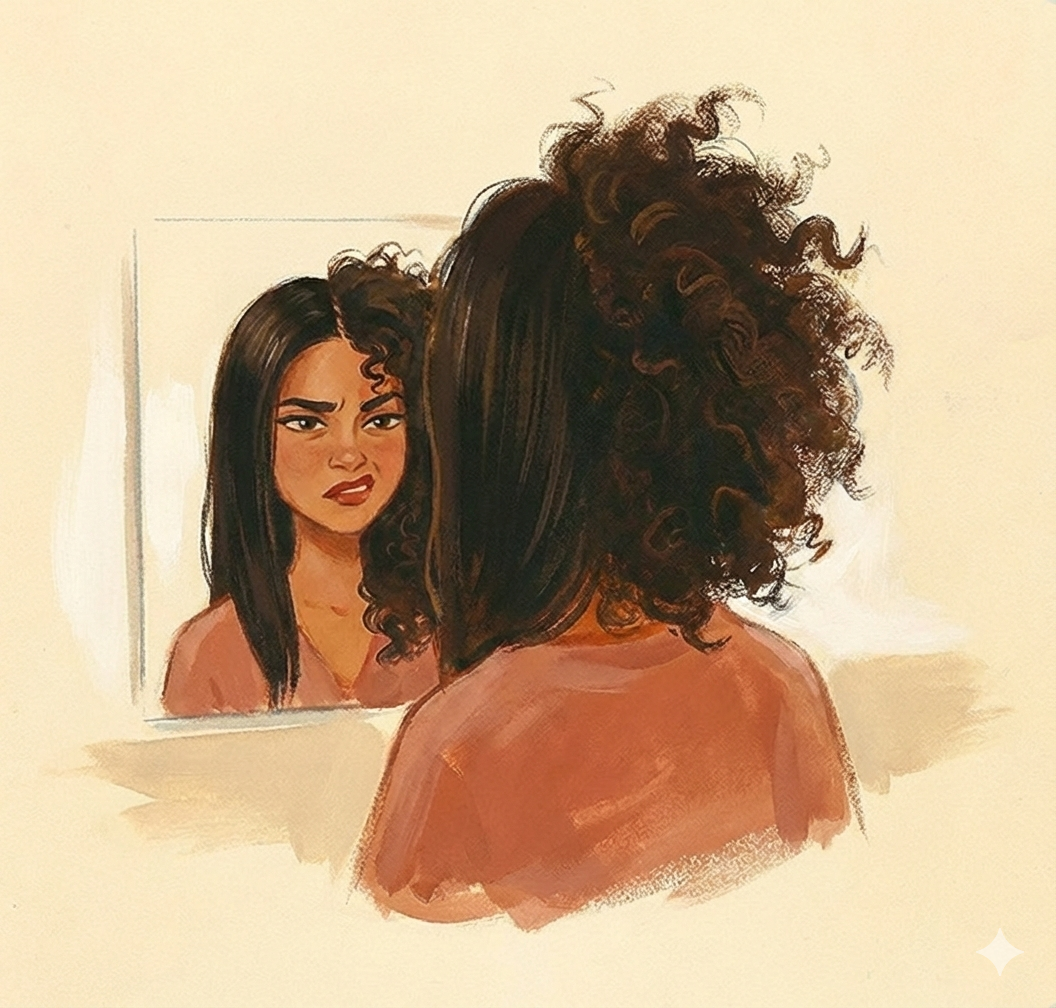
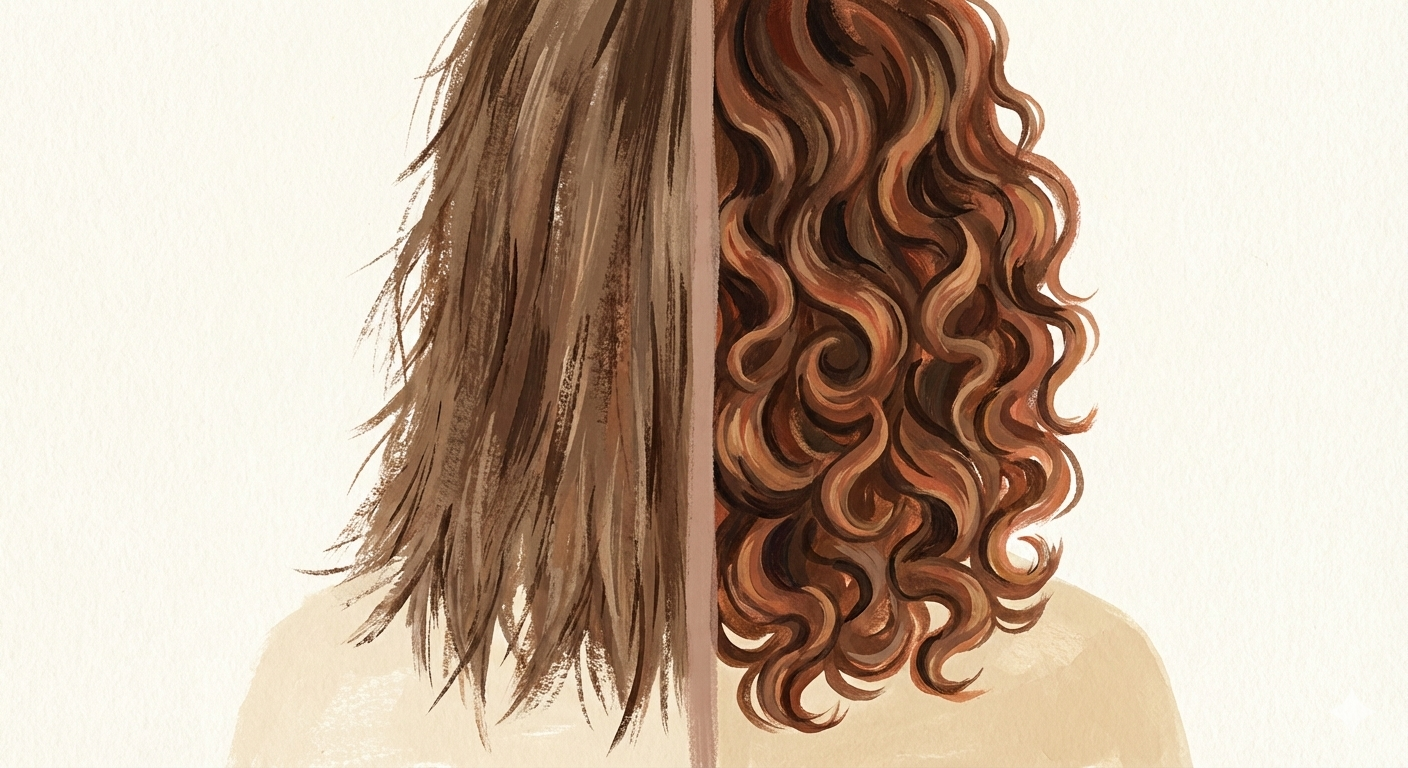
Many people spend years frustrated with hair that seems to have a mind of its own. It might feel like one giant, fluffy poof ball that reacts to every bit of rain or humidity. You brush it to calm it down — and somehow, it only gets worse.
The truth is simple: you probably don’t have “bad” hair.
You have curly hair that’s being treated like straight hair.
This guide breaks down the most common curly hair struggles and explains why they happen — along with practical, beginner-friendly ways to fix them.
If you ever feel unsure whether your products are actually curl-friendly, you can double-check them using the KUURL Product Finder.
Why is my hair always frizzy?
Frizz is the most common curly hair complaint. In the curly community, there’s a saying:
“Frizz is just a curl waiting to happen.”
The why
Curly hair is naturally drier than straight hair. The bends and spirals in the hair strand make it difficult for natural scalp oils to travel from root to tip.
When curls are:
- Dry
- Disturbed by brushing
- Lacking hold during drying
…the strands separate and reach out into the air for moisture. That’s what we see as frizz.
How to fix it
-
Stop dry brushing
Brushing curly hair while dry breaks curl clumps and creates instant frizz. Detangle only in the shower, on soaking wet hair with conditioner. -
Use gel
A hold product forms a gel cast that protects curls while they dry, preventing frizz from forming. -
Limit heat
Frequent flat-ironing or curling permanently weakens the curl structure, leading to chronic frizz.
To understand how to apply products correctly, read:
Master Your Curls: Essential Curly Hair Styling Techniques.
“My products don’t work” — understanding porosity
If it feels like products either sit on your hair or disappear instantly, porosity is usually the missing piece.
The concept
Porosity describes how easily your hair absorbs and retains moisture.
-
Low porosity
The cuticle lies flat. Water beads up, and products tend to sit on the surface. -
High porosity
The cuticle is lifted or damaged. Water absorbs quickly but escapes just as fast.
Why it matters
Porosity determines whether your hair prefers:
- Lightweight, water-based products
- Or richer creams and oils that seal moisture in
This is why one person’s “holy grail” product can be a disaster for someone else.
To identify yours, read:
Understanding Your Curly Hair: Porosity, Density, and Texture.
Why are some parts curlier than others?
Uneven curl patterns are completely normal.
You might notice:
- Tighter curls underneath
- Looser waves on the top “canopy” layer
- Straighter pieces near the front
This often happens because the outer layers experience more:
- Sun exposure
- Heat styling
- Friction from pillows or clothing
What helps
- Apply extra product to looser sections
- Use techniques like finger coiling or brush styling on problem areas
- Be patient — curl patterns often even out as hair becomes healthier
Hard water and hidden buildup
If your hair starts feeling stiff, dull, or brittle no matter what you do, hard water might be the culprit.
What’s happening
Minerals in hard water bind to the hair shaft, creating buildup that blocks moisture and conditioning ingredients.
The fix
- Use a chelating shampoo occasionally
- Follow with deep conditioning
Chelating shampoos are different from regular clarifying shampoos — they’re designed specifically to remove mineral deposits.
You can browse curl-friendly cleansers using the KUURL Product Finder.
Actionable takeaways
- Stop dry brushing — detangle only on wet, conditioned hair
- Use gel on soaking wet hair to control frizz
- Match products to your porosity, not your curl type
- Clarify or chelate occasionally if hair feels coated
- Protect your hair at night with a satin or silk pillowcase
If you want a simple place to start, follow:
The Curly Girl Method: A Complete Beginner’s Guide.
Frequently asked questions
What is my curl type (2A, 3B, etc.)?
Curl type isn’t very useful for choosing products. Porosity and strand thickness matter far more, and most people have multiple patterns on one head.
Can I make my hair grow faster?
Hair growth speed is mostly genetic. What you can do is reduce breakage by improving moisture, scalp health, and handling habits.
Do I need to cut off all damaged hair?
Severely heat- or bleach-damaged hair can’t truly heal. Treatments can help temporarily, but trims are often the best long-term solution.
Why does my hair feel crunchy after gel?
That’s a gel cast — and it’s a good thing. Once hair is 100% dry, gently Scrunch Out The Crunch (SOTC) to reveal softness.
Final thoughts
Curly hair isn’t difficult — it’s just different.
Once you understand why your hair behaves the way it does, everything becomes simpler. Some days will still be better than others, and that’s normal.
Be patient, experiment gently, and give your curls time to adjust. With the right care and understanding, your natural texture can become healthier, softer, and far more predictable.
If you’re ready to build a routine next, read:
Wash Day for Curly Hair: A Step-by-Step Routine for Defined Curls.