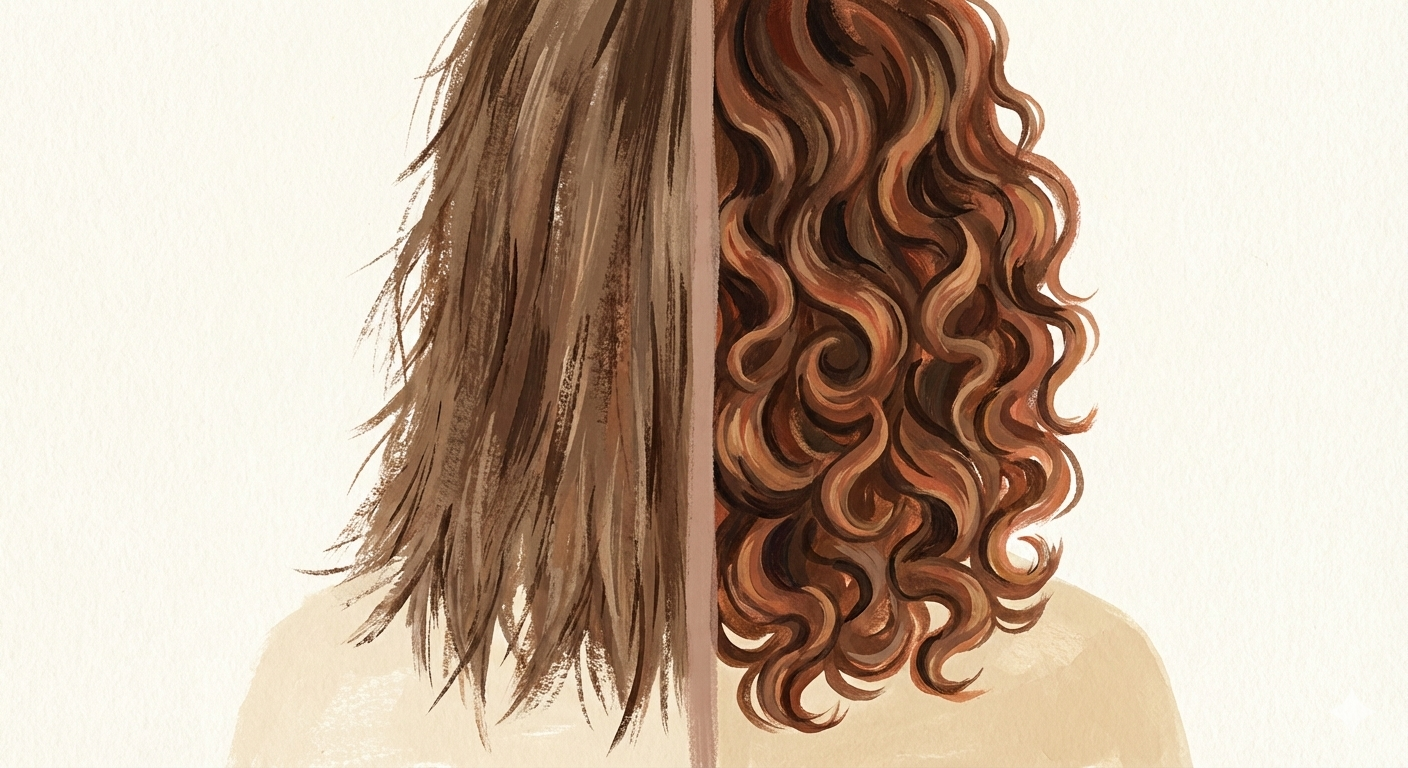
Drying Curly Hair: How to Plop, Diffuse, and Get Root Volume
Learn how to dry curly hair without frizz. This guide covers plopping, diffusing, and root volume techniques for defined, healthy curls.
Many people struggle with hair that turns into a giant, fluffy poof ball as soon as it dries. You might spend hours air-drying, only to end up with curls that look frizzy, limp, or flat at the roots.
The truth is that how you dry your hair is just as important as what you put on it in the shower.
This guide breaks down the most effective curly-hair drying techniques — including plopping and diffusing — so you can dry your curls faster without sacrificing definition or volume.
Already have a routine but struggling at the drying stage? This guide focuses on technique. You can always double-check curl-friendly stylers using the KUURL Product Finder.
Plopping for definition and frizz control
Plopping is a heat-free drying technique that gently removes excess water and product without disturbing the curl pattern.
Why plopping works
Traditional terrycloth towels have rough fibers that lift the hair cuticle and cause frizz. Plopping uses a smooth cotton t-shirt or microfiber towel to absorb moisture without disrupting curl clumps.
Benefits of plopping include:
- Reduced frizz
- Better curl definition
- Increased root lift
- Shorter air-dry time
How to plop your hair
-
The accordion method
Lay a t-shirt or microfiber towel flat. Flip your wet hair onto the center so the curls naturally accordion. Wrap and tie the fabric securely around your head. -
Time frame
Leave your hair plopped for about 15–20 minutes. Longer isn’t always better and can sometimes flatten curls. -
Micro-plopping
If full plopping makes your curls look uneven, try micro-plopping. Gently squeeze or pat the ends of your hair with a towel or t-shirt to remove excess water while leaving the roots untouched.
Plopping works best after styling on soaking wet hair.
If you need help choosing stylers that won’t cause buildup, you can verify them using the KUURL Product Finder.
Diffusing for speed and volume
For dense or low-porosity hair, air drying can take many hours. Diffusing is the most effective way to speed up drying while boosting volume.
Why you should use a diffuser
A diffuser attachment spreads airflow evenly so it doesn’t blast curls apart. While air drying is gentle, diffusing gives you more control over:
- Root volume
- Curl shape
- Overall dry time
How to diffuse safely
-
Temperature matters
Using only hot air can cause frizz and damage, while only cold air can be very slow. A good balance is:- Brief heat to set the gel cast
- Warm or cool air to finish drying
-
Diffusing techniques
- Hover diffusing: Hold the diffuser near your head to dry roots first
- Cup diffusing: Gently place curls into the diffuser bowl to dry the lengths
-
Equipment tip
Look for dryers with a cool-shot button and click-style controls. These are easier to use when drying upside down.
Essential volume techniques
If your curls dry flat on top, small adjustments during drying can make a big difference.
Root clipping
Root clipping lifts curls away from the scalp while they dry.
- Use flat metal or butterfly clips
- Lift a section of damp hair at the root
- Slide the clip in to hold it upright
- Remove clips once hair is fully dry
This technique works especially well for fine or low-density hair.
Upside-down drying
Drying upside down prevents curls from settling flat against the scalp.
- Style and diffuse while bending forward
- Encourages lift and movement at the roots
If you have a sensitive scalp or dizziness, limit how long your hair stays upside down.
Actionable takeaways
- Ditch terrycloth towels — use t-shirts or microfiber only
- Hands off while drying to protect the gel cast
- Use low or medium heat when diffusing
- Plop briefly, not excessively
- Fluff only when dry to avoid frizz
If drying issues persist, double-check whether your stylers are curl-friendly using the KUURL Product Finder.
Frequently asked questions
Should everyone plop their hair?
Plopping works for many curl types, but it can be hit-or-miss for very short hair. If you have a scalp condition, prolonged plopping may not be recommended.
Why does my hair feel crunchy after drying?
That crunch is a gel cast, which protects curls while they dry. Once hair is fully dry, gently Scrunch Out The Crunch (SOTC) to reveal softness.
Is diffusing better than air drying?
Neither is universally better. Air drying is simple and hands-off, while diffusing is ideal if you want faster drying or more volume.
A note on your journey
Drying curly hair takes practice. Your curls may respond differently depending on humidity, product choice, or even how wet your hair was when you started.
Don’t be discouraged if your first few attempts aren’t perfect. With patience and experimentation, you’ll find the drying routine that brings out the best in your curls.
If you want to apply these techniques within a full routine, read next:
Wash Day for Curly Hair: A Step-by-Step Routine for Defined Curls.