Transitioning to Natural Curls: A Guide to Repairing Damaged Hair
Tired of heat and chemical damage? Learn how to transition to natural curls with this beginner guide on repairing your hair and supporting healthy new growth.
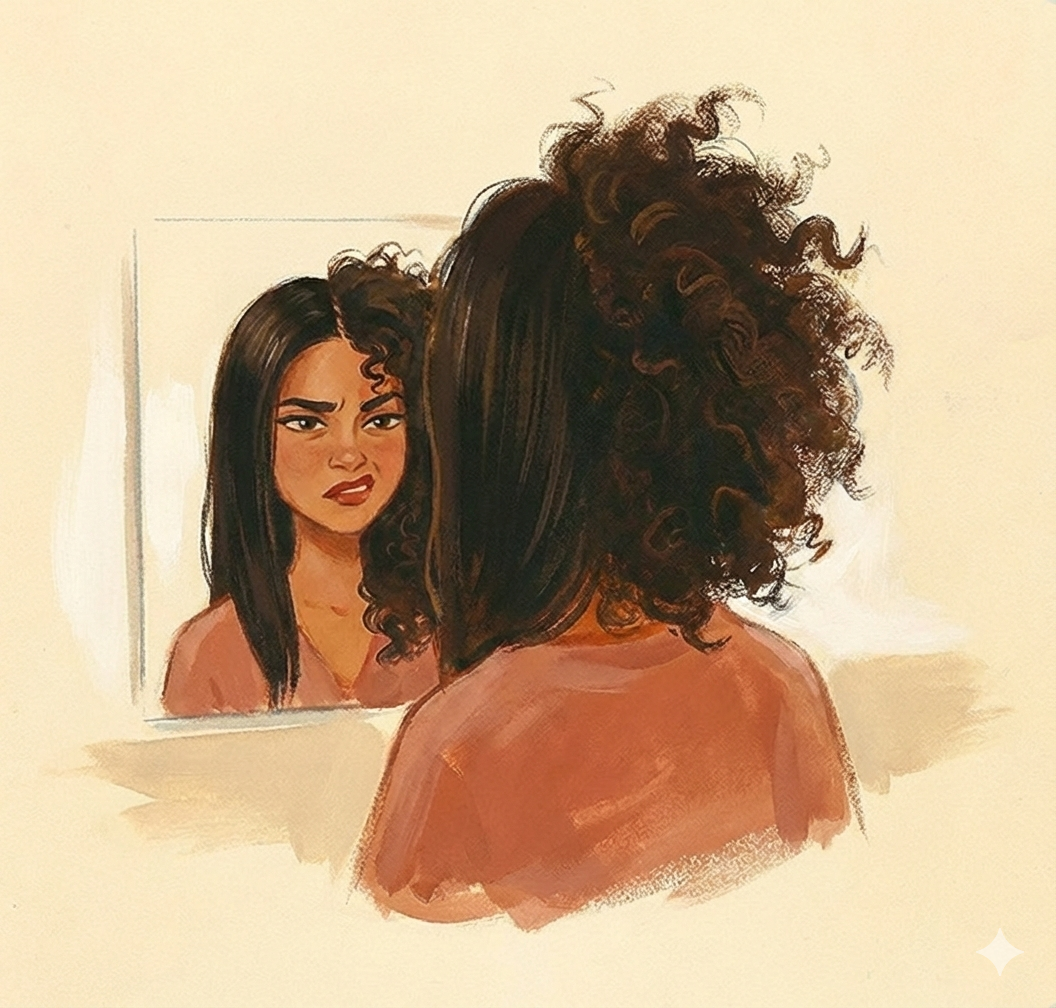
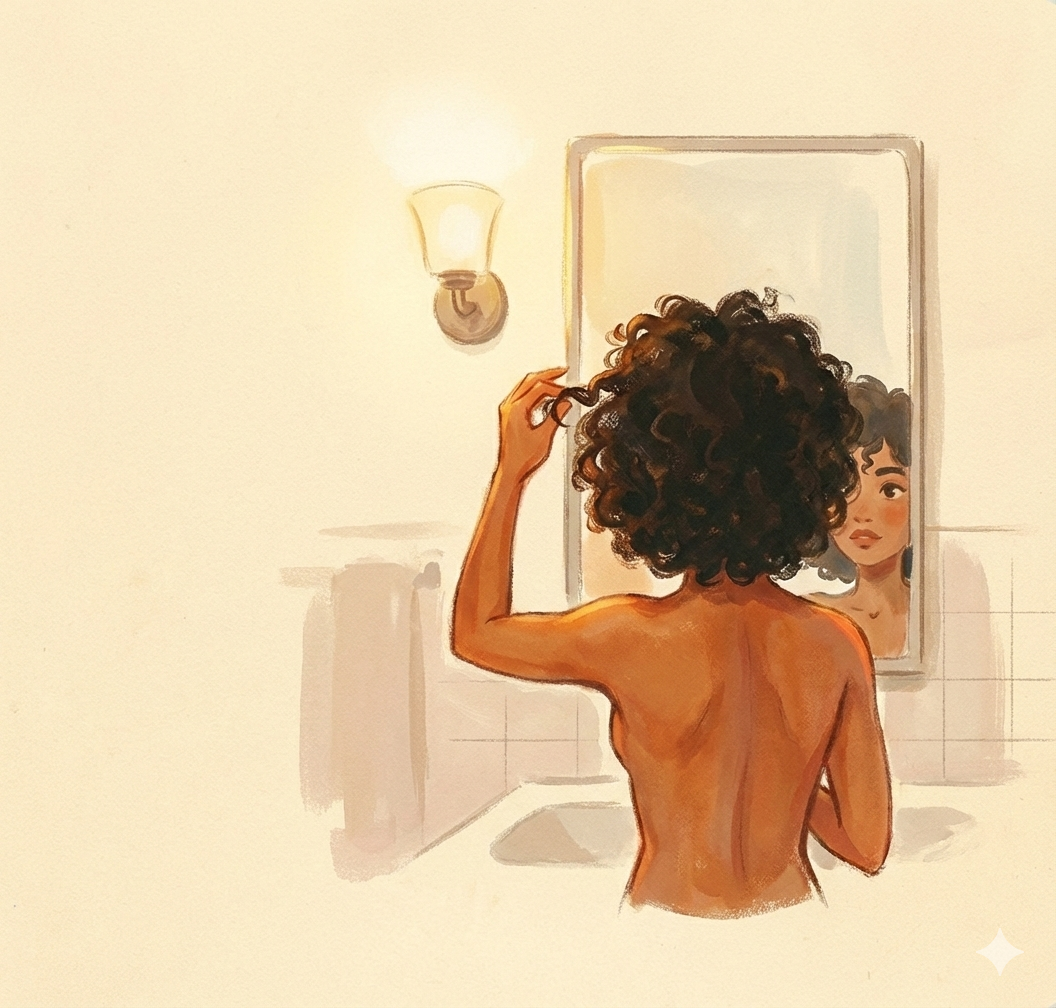
If you’ve spent years chemically relaxing your hair or using a flat iron every morning, it can feel like your natural curls are gone forever. You might look at your hair and see only frizz, breakage, and a stubborn “poof” that refuses to curl.
The common belief is that your hair is just bad.
In reality, it’s usually damaged — and damage can be managed.
This guide walks you through the transition from chemically straightened or heat-damaged hair back to your natural texture. We’ll cover how to stop further damage, manage the awkward in-between phase, and build habits that support healthy new growth.
If you’re unsure whether your current products are curl-friendly during the transition, you can verify them using the KUURL Product Finder.
Breaking the cycle of damage
The most important step in transitioning is stopping the habits that caused the damage in the first place.
Why your curls stopped forming
Hair gets its permanent shape from disulfide bonds — strong internal bonds that determine whether hair is straight or curly.
- Chemical relaxers permanently break these bonds
- High heat weakens them over time
Once enough bonds are damaged, the hair loses its ability to spring back into a curl. This doesn’t mean your curls are gone — it means the damaged length can’t behave like healthy hair anymore.
Quit chemicals and reduce heat
-
Stop chemical relaxers
Relaxers permanently alter the hair shaft. To see your natural texture, they must be discontinued. -
Ditch high-heat tools
Temperatures above ~140°F begin damaging hair. Flat irons and curling irons cause severe structural harm, especially with repeated use. -
Use heat protectants sparingly
If heat is unavoidable, always use a heat protectant — but be aware that many contain silicones, which require clarifying to remove.
To understand how heat and handling affect curls, read:
Curly Hair Problems Solved: Your Top Questions Answered Simply.
Managing the transition phase
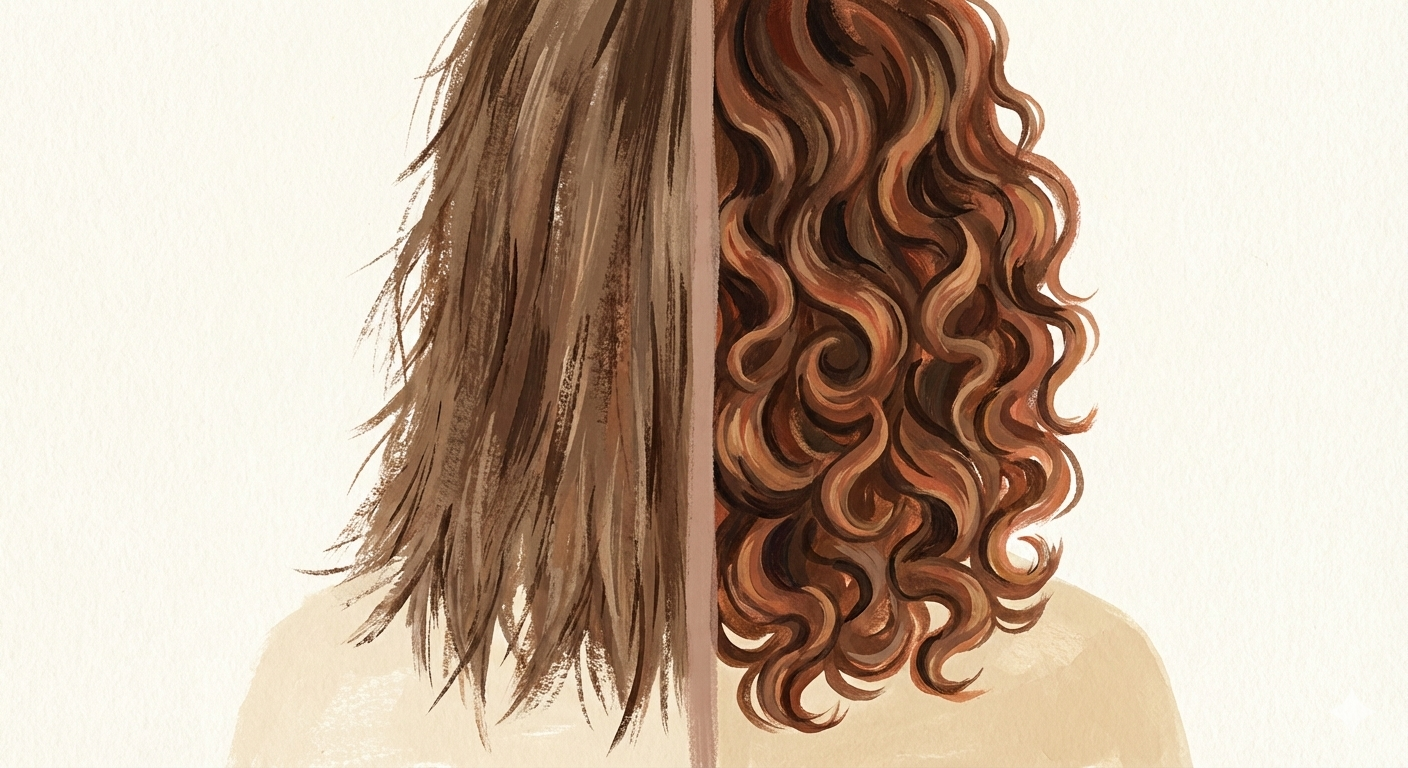
The hardest part of transitioning is living with two textures at once — curly roots and straight or damaged ends.
How to blend textures without heat
Heatless styles help the damaged ends mimic your natural curl pattern while protecting new growth.
-
Braid-outs and twist-outs
Encourage uniform waves or curls. -
Bantu knots
Create defined curls without heat. -
Flexi rods
Help shape hair evenly during the grow-out phase.
These styles reduce frustration and help you avoid reaching for hot tools.
Fortify your hair weekly
Transitioning hair is often dry, brittle, and fragile. Regular treatments help support it while it grows.
-
Protein treatments
Helpful if hair feels overly soft, weak, or “mushy.” -
Deep conditioners
Essential for moisture, especially for high-porosity or chemically damaged hair. -
Bond builders
Products like Olaplex or K18 help reinforce broken internal bonds. They don’t “heal” hair, but they can improve strength and manageability.
If you’re unsure which treatments are curl-friendly, you can check availability using the KUURL Product Finder.
The “reset cut” and new habits
At some point, damaged ends need to be addressed honestly.
What is a reset cut?
Hair is not living tissue — it cannot truly heal itself. When ends are severely damaged by bleach or chemicals, a reset cut (sometimes called a big chop) removes the damaged length so healthy hair can thrive.
This doesn’t have to be drastic or immediate. Some people trim gradually; others choose a full reset. Both paths are valid.
Be gentle with new growth
Healthy curls need gentle handling:
-
Detangle safely
Only detangle soaking wet hair with plenty of conditioner. Use fingers or a wide-tooth comb. -
Avoid rough towels
Skip terrycloth. Use a cotton t-shirt or microfiber towel. -
Follow a simple routine
Cleanse gently, condition until hair feels like slimy seaweed, and style with gel to protect curls as they dry.
For a step-by-step routine, read:
Wash Day for Curly Hair: A Step-by-Step Routine for Defined Curls.
Actionable takeaways
- Stop chemical treatments and reduce high heat
- Use weekly treatments (protein or deep conditioning)
- Rely on heatless styles during the grow-out phase
- Detangle only when wet with conditioner
- Trim damaged ends gradually or all at once — your choice
Frequently asked questions
Do I have to cut all my hair off to start over?
No. You can transition gradually using protective or heatless styles. However, severely damaged ends won’t recover, so trimming is eventually necessary.
Can I still use a blow dryer?
Yes. Use a diffuser on low or medium heat. Diffusing is far gentler than flat ironing.
Why does my hair still feel like straw?
You may be overusing protein or dealing with hard-water buildup. Clarify occasionally and follow with a protein-free deep conditioner.
How long does transitioning take?
Hair grows about 6 inches per year. You’ll notice healthier roots quickly, but fully growing out damaged ends takes time.
A note on your journey
Transitioning to natural curls is as much emotional as it is physical. Your hair has been through years of stress, and it deserves patience.
Some days will feel discouraging. Others will feel like a breakthrough. Both are part of the process.
With gentle care, consistency, and time, your natural texture can re-emerge — healthier, stronger, and more resilient than before.
If you’re just starting out, begin here:
The Curly Girl Method: A Complete Beginner’s Guide.